Rent Calculator: How Much Rent Can I Afford in Australia?
Finding the right rental home is exciting, but choosing a property that fits your budget requires careful planning. Whether you are searching for houses for rent in Sydney, Melbourne, Brisbane, Perth, or a regional Australian town, knowing your affordable rent range can help you make a smarter decision.
Your budget should cover more than the advertised weekly rent. You also need money for groceries, electricity, transport, insurance, savings, and unexpected expenses. A property that looks affordable online may become difficult to manage once these costs are included.
A rent calculator can help you estimate a suitable rental budget before you start contacting property managers or attending inspections. In this guide, you will learn how to calculate affordable rent, understand common budgeting rules, compare rental options, and prepare for the costs of moving into a new home.
Table of Contents
What Is a Rent Calculator?
A rent calculator is a budgeting tool that helps you estimate how much you can comfortably spend on accommodation. Depending on the calculator, you may enter your income, expected rent, and other expenses to understand how a rental property could affect your finances.
For example, someone earning $6,000 per month after tax has a different rental budget from someone earning $3,500. Their existing expenses, savings goals, and household responsibilities also influence what they can afford.
Using a rent calculator before searching for houses for rent can help you establish a realistic price range. Instead of choosing a property based only on its appearance or location, you can compare the advertised rent with your actual financial situation.
Start with your budget: Use the Calcuhive rent calculator to explore your rental costs and plan your housing expenses. If you have a dedicated rent calculator page, link this text directly to that tool.

How Much Rent Can I Afford in Australia?
The amount of rent you can afford depends on your take-home income, regular expenses, debts, household size, and financial goals. There is no single rental amount that works for everyone.
A commonly used budgeting guideline suggests keeping housing costs around 30% of gross household income. However, this is only a starting point. It does not guarantee that a particular property will be affordable, especially if you have substantial expenses or live in an expensive rental market.
For a practical estimate, consider both your income and the money remaining after essential expenses.
The 30% Rent Rule Explained
The 30% rule compares your rent with your household’s gross income, which is income before tax.
The basic formula is:
Affordable weekly rent = Annual gross household income × 30% ÷ 52
Suppose your household earns $90,000 annually before tax.
- Annual gross income: $90,000
- Thirty percent of income: $27,000
- Estimated weekly rent: $27,000 ÷ 52
- Estimated weekly amount: approximately $519
Under this guideline, rent of around $519 per week would equal 30% of your gross annual income.
However, this figure is not a personal affordability guarantee. Income tax, loan repayments, childcare, transport, and other expenses may leave you with less money than expected.
Use the percentage as an initial reference, then calculate your actual disposable income before deciding how much rent to pay.
How to Calculate Affordable Rent Step by Step
You can estimate your rental budget by following these five steps.
Step 1: Calculate Your Household Income
Start by identifying how much money your household earns. Include reliable income from employment and other regular sources.
For the 30% guideline, use gross income before tax. For your everyday budget, use take-home income after tax and other deductions.
For example, assume your household receives $5,200 per month after tax. This is the amount available to cover rent, food, bills, transport, savings, and other expenses.
If you share a property with a partner, consider combining your incomes only if both of you will contribute reliably to household costs.
Step 2: List Your Monthly Expenses
Write down your regular expenses before choosing a rental property.
These might include:
- Groceries and household supplies
- Electricity, gas, water, and internet
- Public transport, petrol, and vehicle expenses
- Phone bills and insurance
- Credit card payments and personal loans
- Childcare, education, and medical costs
- Savings and emergency funds
Include expenses that occur less frequently, such as car registration, annual insurance premiums, and vehicle servicing. Estimate their monthly cost so they do not unexpectedly disrupt your budget.
Step 3: Decide How Much Money You Need to Keep
After listing your expenses, decide how much money you need for essential spending, savings, and unexpected costs.
For example, if your monthly take-home income is $5,200 and your non-rent expenses and savings allocation total $2,900, you have $2,300 remaining.
This amount is a useful starting point, but it does not mean you should spend the entire $2,300 on rent. You may need additional money for variable bills, irregular expenses, or changes in income.
Step 4: Estimate Your Maximum Weekly Rent
Convert your available monthly amount into a weekly figure to compare it with Australian rental listings.
The formula is:
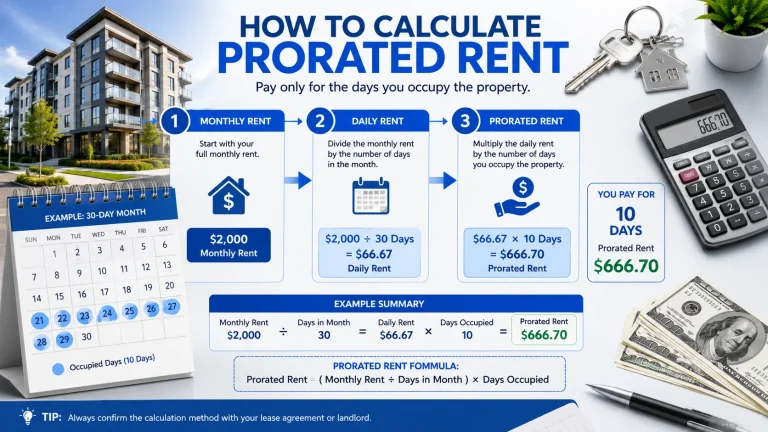
Weekly rent = Monthly rent × 12 ÷ 52
For example, if you are considering rent of $1,600 per month:
$1,600 × 12 ÷ 52 = approximately $369.23 per week.
Remember that Australian property advertisements commonly quote rent per week. Converting monthly figures into weekly amounts makes it easier to compare properties consistently.
Step 5: Test Your Budget Before Committing
Before signing a rental agreement, check whether your budget would still work if expenses increased.
Ask yourself:
- Could I afford the rent if my electricity bill increased?
- Would I still have money for groceries and transport?
- Could I handle an unexpected car repair?
- Would I be able to save something each month?
- Could I manage the rent if my income temporarily decreased?
If the answer to several questions is no, consider a less expensive property, a different suburb, or a suitable shared rental arrangement.
Rent Affordability Examples for Australian Households
The following examples demonstrate how different income levels can affect rental budgets. They are illustrations rather than recommendations or current market estimates.
| Monthly take-home income | Other expenses and savings | Remaining before rent | Illustrative weekly rent ceiling |
|---|---|---|---|
| $3,500 | $2,100 | $1,400 | About $323 |
| $5,000 | $2,800 | $2,200 | About $508 |
| $6,500 | $3,700 | $2,800 | About $646 |
The weekly rent ceilings are calculated by multiplying the remaining monthly amount by 12 and dividing by 52.
These figures assume that the listed expenses already include your other planned spending and savings. They also leave no additional margin beyond the stated budget, so a lower rent may be more comfortable.
For instance, a household with $5,000 in monthly take-home income and $2,800 in other expenses has $2,200 remaining. Spending all of it on rent would leave little room for unplanned costs. Choosing a property below the calculated ceiling could provide more financial flexibility.
What Costs Should You Include When Renting a House?
When comparing houses for rent, look beyond the advertised price. Several additional costs can affect the amount you can comfortably afford.
Rental Bond and Upfront Payments
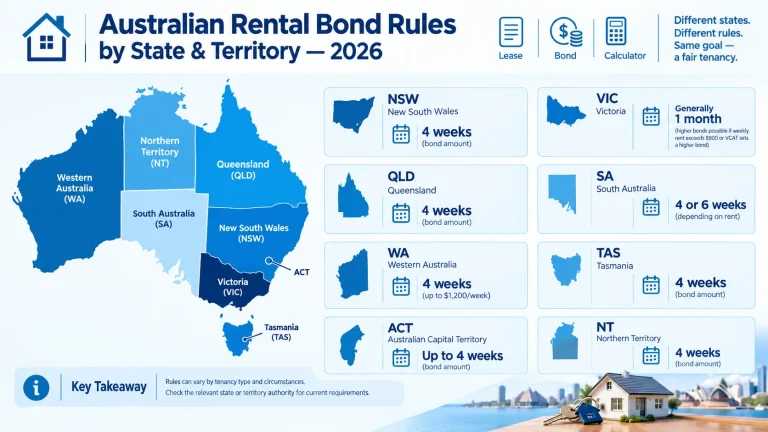
A rental bond is an upfront payment that may be required when entering a tenancy. Rules and limits differ between Australian states and territories.
You may also need to prepare for rent in advance, moving expenses, utility connections, and household essentials. Check the applicable rules in your state or territory before signing an agreement.
Electricity, Gas, Water, and Internet
Utility costs depend on the property, household size, climate, and usage. A larger house may cost more to heat or cool than a smaller apartment.
Ask which utilities are included in the rent and which expenses you must pay separately. This helps you estimate the property’s real monthly cost.
Transport and Commuting
A cheaper property farther from work may increase your transport expenses.
Calculate petrol, public transport fares, parking, tolls, and the time needed to commute. Sometimes, paying slightly more for a conveniently located property can reduce your overall expenses.
Household Maintenance and Everyday Needs
Tenants may need to budget for cleaning products, replacement household items, laundry, and other everyday necessities.
Your responsibilities for maintenance and repairs depend on the tenancy agreement and applicable state or territory laws. Do not automatically assume that every repair is your responsibility.
How to Find Houses for Rent Within Your Budget
Once you know your affordable rent range, you can search for suitable properties more efficiently.
Choose Your Maximum Weekly Rent
Set a maximum price before browsing listings. This helps you avoid spending time on properties that would place too much pressure on your finances.
If your estimated comfortable rent is $450 per week, begin by searching around that figure or below it. You can adjust the range if your full budget supports a higher amount.
Compare Different Suburbs
Rental prices can vary significantly between suburbs, even within the same city. Consider nearby areas with reasonable access to work, schools, public transport, and essential services.
Do not compare locations on rent alone. Calculate the combined cost of accommodation and transport to understand which option offers better value.
Compare the Full Property Cost
Two houses with similar weekly rents may have different overall costs.
One property might have better insulation, while another requires more heating and cooling. One might be close to public transport, while another requires regular driving.
Review the property’s features, expected utility costs, location, and tenancy conditions before deciding.
Prepare Your Rental Application
When you find a suitable property, prepare the documents the property manager requests. These may include identification, evidence of income, rental references, and other relevant supporting information.
Requirements vary by property manager and jurisdiction. Provide accurate information and check the application process before submitting sensitive documents.
Can Centrelink Rent Assistance Help With Your Budget?
Some Australian renters may qualify for Commonwealth Rent Assistance, which can help eligible people with accommodation costs.
Eligibility depends on factors such as the payment you receive, your accommodation type, and how much eligible rent you pay. Not every renter qualifies.
According to Services Australia, eligible people are assessed for Rent Assistance when claiming certain payments or updating their accommodation details. You generally do not need to submit a separate Rent Assistance claim. Check the official Services Australia Rent Assistance guide for current eligibility rules and payment information.
If you receive an eligible Centrelink payment, check whether Rent Assistance applies to your circumstances. Treat any assistance as part of your budget only after confirming your eligibility and likely payment amount.

Common Mistakes to Avoid When Calculating Rent
Even a useful rent calculator can produce an unrealistic budget if you enter incomplete information.
Using gross income as spendable money: Gross income is useful for the 30% guideline, but your everyday budget should account for take-home pay.
Ignoring irregular expenses: Car registration, insurance, medical costs, and repairs can disrupt your budget if you do not plan for them.
Spending the entire remaining balance on rent: Your budget needs room for unexpected expenses and changing circumstances.
Forgetting upfront moving costs: Bond, advance rent, moving services, and household essentials can require significant savings before you move.
Choosing a property based only on location: A convenient location is valuable, but it should not force you to sacrifice essential expenses or financial stability.
Assuming assistance is guaranteed: Check government eligibility rules instead of automatically including a payment in your expected income.
Avoiding these mistakes can help you select a rental property that supports your lifestyle without placing unnecessary pressure on your finances.
Frequently Asked Questions
1. How much rent can I afford on a $70,000 salary in Australia?
Using the 30% gross-income guideline, 30% of a $70,000 annual salary is $21,000 per year, or approximately $404 per week. This is a budgeting reference, not a guarantee of affordability. Your take-home income, debts, household expenses, and savings goals determine whether that rent is comfortable.
2. Is the 30% rent rule suitable for everyone?
No. The 30% rule is a general guideline and does not account for every household’s circumstances. A person with high childcare or transport costs may need to spend less, while another household may have more flexibility. Review your actual budget before setting a rent limit.
3. Should I calculate rent using income before or after tax?
Use gross income before tax when applying the traditional 30% guideline. For your personal spending plan, use take-home income after tax and deductions. This makes it easier to see how much money remains for rent and other expenses.
4. How do I convert weekly rent into monthly rent?
Multiply weekly rent by 52 and divide the result by 12.
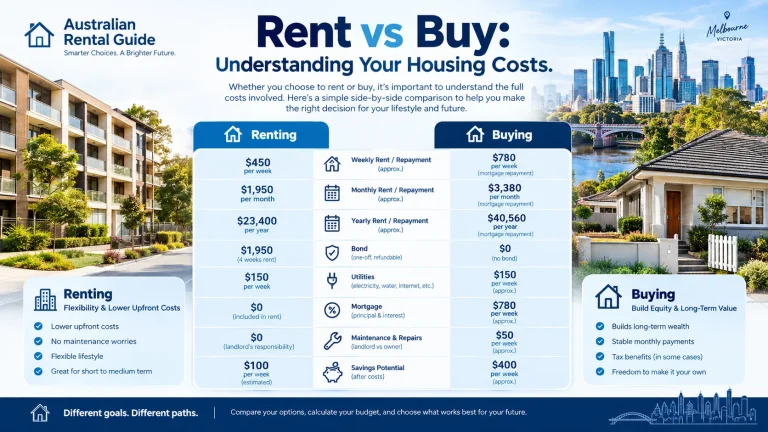
For example, rent of $450 per week equals approximately $1,950 per month: $450 × 52 ÷ 12 = $1,950.
This method accounts for the fact that a year contains 52 weeks rather than exactly 48.
5. Can I afford a house if I live alone?
Yes, depending on your income, expenses, location, and rental price. However, renting an entire house alone may cost more than sharing a property or choosing a smaller home. Compare the full costs of each arrangement before making a decision.
6. What should I do if houses for rent are above my budget?
Consider expanding your search to nearby suburbs, looking at smaller properties, or exploring suitable shared accommodation. Review transport costs and government assistance eligibility where relevant. Avoid committing to rent that leaves you unable to cover essential expenses.
Final Thoughts
Finding suitable houses for rent in Australia starts with understanding your finances. Your income provides a starting point, but your regular expenses, savings goals, transport costs, and upfront payments all influence what you can comfortably afford.
Use a rent calculator to estimate your budget, compare weekly and monthly rental prices, and check how different properties affect your remaining income. The 30% rule can provide an initial reference, but your actual circumstances should guide your final decision.
Before you apply for your next rental property, calculate your budget and choose a rent range that leaves room for everyday living and unexpected expenses. A home should fit your lifestyle without making every payday a financial struggle.