Australian Rental Bond Rules: 2026 Guide
If you rent a home in Australia, you will usually be asked to pay a rental bond as security against unpaid rent, damage, or other legitimate costs. However, Australian rental bond rules are not identical across every state and territory, so the maximum amount and bond-handling process depend on where you live.
As of September 2026, most jurisdictions generally limit a standard residential bond to around four weeks’ rent, but South Australia and Western Australia have important exceptions for higher-rent properties. NSW has also introduced a new Smart Rental Bonds scheme during 2026.
Table of Contents
What Is a Rental Bond?
A rental bond is the security given to the landlord or rental provider by the tenant at the start of a tenancy.
It may be utilized to pay for proper expenses, like
- unpaid rent
- Damage done by tenant
- unreasonable cleaning costs
- certain unpaid charges
- Other costs include under the relevant tenancy legislation.
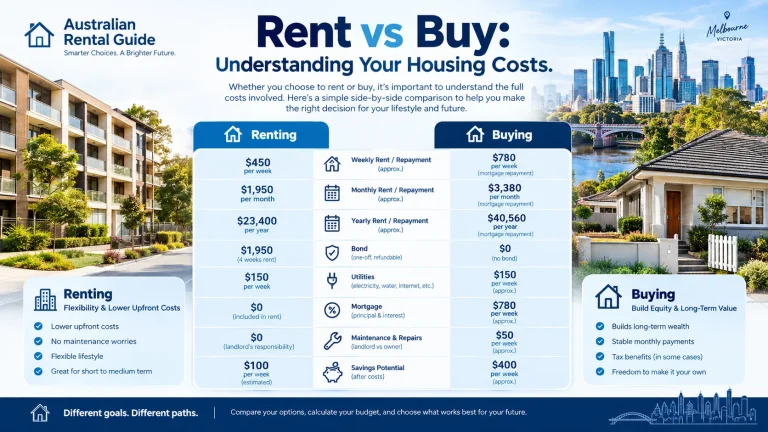
A bond is not the same as a rent. You would not be able to just demand from your landlord that your last month’s rent be deducted from the bond.
So, too, does the manner of holding the bond vary depending on the jurisdiction. NSW, for instance, has Rental Bonds Online, Victoria has the Residential Tenancies Bond Authority (RTBA), and the NT has a trust-account arrangement.

Australian Rental Bond Rules by State
One of the easiest ways to understand Australia’s bond system is to compare the maximum standard bond in each jurisdiction.
| State/Territory | General maximum bond | Important rule |
|---|---|---|
| NSW | 4 weeks’ rent | Bond must not exceed four weeks’ rent |
| Victoria | Usually 1 month’s rent | Higher bond can apply when weekly rent exceeds $900. |
| Queensland | 4 weeks’ rent | Different limits apply to some moveable dwellings. |
| South Australia | 4 or 6 weeks’ rent | Six weeks can apply when rent is over $800/week |
| Western Australia | 4 weeks’ rent | The higher/no-limit rule can apply above $1,200/week. |
| Tasmania | 4 weeks’ rent | Bond cannot be increased during the tenancy. |
| ACT | 4 weeks’ rent | Bond is lodged with the ACT Rental Bonds Office. |
| Northern Territory | 4 weeks’ rent | The landlord holds the bond in trust. |
These are general residential tenancy rules. Special arrangements can apply to rooming houses, caravan parks, residential parks, employer-provided accommodation, and other types of housing.
New South Wales
In NSW, a residential rental bond generally cannot exceed four weeks’ rent. NSW Fair Trading manages rental bonds, and tenants can use Rental Bonds Online to lodge their bond.
A significant 2026 development is Smart Rental Bonds. The optional scheme allows eligible NSW renters to transfer an existing bond to a new rental property instead of having to find the entire new bond before the previous one is released. The staged rollout began in August 2026.
Victoria
Victoria generally limits a residential rental bond to one month’s rent. However, if weekly rent is more than $900, the standard one-month limit does not apply in the same way, and VCAT can also set a higher bond in certain circumstances.
Victorian bonds are held by the Residential Tenancies Bond Authority (RTBA). The bond is the renter’s money and is generally returned at the end of the agreement unless a legitimate claim or dispute applies.
Queensland
Queensland changed its maximum bond rules in September 2024. For general residential tenancies, a bond cannot exceed four weeks’ rent, regardless of the weekly rent amount.
The Queensland RTA must generally receive a bond within 10 days when the lessor or agent receives it from the tenant. Queensland also provides bond-loan assistance for eligible renters who cannot afford the upfront amount.
Special limits apply to moveable dwellings, where the maximum can be two weeks’ rent or three weeks when electricity is provided.
South Australia
South Australia is one of the jurisdictions where renters need to pay particular attention to the weekly-rent threshold.
For residential properties:
- $800/week or less: maximum bond is four weeks’ rent.
- More than $800/week: maximum bond is six weeks’ rent.
The threshold was increased in 2023, meaning most South Australian rental properties now fall under the four-week limit.
For example, if rent is $600 per week, a four-week maximum bond would be:
$600 × 4 = $2,400
If rent is $1,000 per week, the six-week maximum would be
$1,000 × 6 = $6,000
Western Australia
Western Australia generally caps a residential security bond at four weeks’ rent when weekly rent is $1,200 or less. Where weekly rent exceeds $1,200, the usual cap does not apply, and the bond amount can be higher.
WA also has separate rules concerning pet bonds. Current official information lists a pet bond of up to $350 for residential tenancies, with assistance dogs excluded from that charge.
Tasmania
Tasmania has a straightforward general rule: a rental bond cannot be more than four weeks’ rent and cannot be increased during the tenancy. Rental bonds are managed online through MyBond, and the Rental Deposit Authority holds the bond.
An unusual feature of Tasmania’s system is that a property owner or agent cannot simply receive and keep the bond themselves. The official process requires the bond to be registered through MyBond.
Australian Capital Territory
In the ACT, residential rental bonds can be up to four weeks’ rent. If a lessor or agent receives a bond, they must lodge it with the Rental Bonds Office.
The ACT also allows certain guarantees or indemnities as alternatives or supplements to cash bonds, but strict rules apply. Commercial alternatives require registration, and the ACT Government’s 2026 Renting Book states that there are currently no registered commercial alternatives to bonds.
Northern Territory
The Northern Territory generally limits a residential security deposit to four weeks’ rent. The landlord must hold the security deposit in trust rather than treating it as ordinary rental income.
For example, if your rent is $550 per week:
$550 × 4 = $2,200 maximum bond
The NT also has bond assistance for eligible low-income renters, potentially covering up to four weeks’ rent as a security deposit plus an option for two weeks’ rent in advance.
How Much Rental Bond Can a Landlord Ask For?
The basic calculation is simple:
Rental bond = weekly rent × permitted number of weeks
For example:
| Weekly rent | 4-week bond | 6-week bond |
|---|---|---|
| $400 | $1,600 | $2,400 |
| $500 | $2,000 | $3,000 |
| $600 | $2,400 | $3,600 |
| $800 | $3,200 | $4,800 |
| $1,000 | $4,000 | $6,000 |
The key issue is that you cannot automatically assume four weeks applies everywhere. South Australia’s higher-rent threshold and Western Australia’s $1,200 threshold are good examples of why renters should check their state rules before paying.
What Can a Landlord Deduct From Your Bond?
A bond is not automatically lost when you move out.
A landlord or rental provider generally needs a legitimate reason to claim money from it. Depending on the jurisdiction and circumstances, this may include:
- unpaid rent
- damage beyond normal wear and tear
- unreasonable cleaning costs
- unpaid charges permitted by the tenancy agreement or legislation
- other legitimate financial losses connected with the tenancy.
Normal wear and tear is different from tenant damage. Faded paint, ordinary carpet wear, or deterioration caused by normal use should not automatically be treated as damage caused by the renter.
This distinction is particularly important when a landlord claims a large amount for cleaning or repairs.
How to Protect Your Rental Bond
The best time to protect your bond is before you move in.
1. Complete the condition report carefully.
Record the property’s condition when you receive the keys.
Look for:
- marks on walls
- damaged flooring
- broken fittings
- stains
- cracked tiles
- damaged appliances
- dirty areas
- scratches or dents
- outdoor damage.
2. Take dated photographs.
Photos can provide useful evidence if there is later a disagreement about whether damage existed before your tenancy.
Take wide photographs showing the room and close-up photographs showing specific defects.
3. Keep your documents.
Keep copies of:
- tenancy agreement
- condition report
- bond receipt
- rent records
- repair requests
- emails and messages with the agent or landlord
- photographs taken when moving in and out.
4. Compare the property when leaving.
Before handing back the keys, compare the property against your original condition report.
Clean areas that are your responsibility and document the property’s final condition with photographs.
5. Don’t assume a bond claim is automatically valid.
If you disagree with a deduction, check your state’s dispute process rather than simply accepting it.
Bond procedures differ across Australia, so the correct tribunal, authority, and process depend on your location.
What Happens When You Move Out?
At the end of a tenancy, the bond should generally be returned to the tenant after legitimate deductions, if any, have been resolved.
The process varies between jurisdictions, but it normally involves:
- The tenancy ends.
- The property is inspected.
- Any legitimate bond claims are identified.
- The tenant and landlord agree on deductions, or a dispute process is used.
- The relevant bond authority or system releases the remaining money.
In Victoria, for example, the RTBA repays the bond according to the agreement between the renter and rental provider or according to an order from VCAT or a court.
South Australia also allows tenants to request a bond refund, with undisputed refunds processed through its Residential Bonds Online system.
2026 Changes Renters Should Know
One of the most useful updates for renters in 2026 is the NSW Smart Rental Bonds rollout.
Traditionally, moving house can create a cash-flow problem: you may need to pay a new bond before the bond from your old property has been refunded.
NSW’s optional Smart Rental Bonds system is designed to bridge that gap by allowing eligible renters to transfer an existing bond to a new NSW rental property. Eligibility conditions apply, including requirements around the existing bond, the new property, and the timing of the move.
Another useful 2026 reminder is that rental bond rules should be checked against the state or territory where the property is located, not where the tenant normally lives.
That sounds obvious, but it matters for people moving interstate.
A Simple Rental Bond Example
Suppose you are moving into a property with rent of $650 per week.
If your jurisdiction permits a maximum four-week bond:
$650 × 4 = $2,600
So your maximum standard bond would be $2,600.
But if you were renting a property in South Australia at $900 per week, the applicable maximum could be six weeks:
$900 × 6 = $5,400
This illustrates why checking the state-specific rule is more important than relying on a single “four weeks everywhere” assumption.
Key Takeaways for Australian Renters
Australian rental bond rules are broadly similar, but there are important differences.
- NSW generally caps residential bonds at four weeks’ rent.
- Victoria generally uses a one-month limit, with exceptions for higher-rent properties.
- Queensland generally caps bonds at four weeks’ rent.
- South Australia allows up to six weeks for properties where rent exceeds $800 per week.
- Western Australia has a four-week limit up to the $1,200 weekly-rent threshold, with different rules above it.
- Tasmania generally caps bonds at four weeks.
- ACT bonds can be up to four weeks.
- Northern Territory bonds can be up to four weeks.
Before paying a bond, check the rules that apply to your exact property and tenancy type.
A bond is a significant upfront expense, so knowing the legal maximum can help you spot an incorrect charge and budget realistically for your move.
FAQ (Frequently Asked Questions)
How many weeks’ rent is a rental bond in Australia?
There is no single national rental bond limit. Most jurisdictions generally use a four-week maximum for standard residential rentals, while exceptions apply. South Australia can allow up to six weeks for rent above $800 per week, and Western Australia has different rules for properties where weekly rent exceeds $1,200.
Can a landlord keep my entire rental bond?
A landlord cannot simply keep a bond without a legitimate basis. Claims may relate to unpaid rent, tenant-caused damage, unreasonable cleaning, or other amounts permitted under the applicable tenancy laws. Disputed claims can generally be challenged through the relevant state or territory process.
Can I use my rental bond to pay my last month’s rent?
Generally, no. A rental bond and rent are separate financial obligations. You should continue paying rent according to your tenancy agreement unless your landlord or the relevant authority confirms another lawful arrangement.
Does the rental bond have to be lodged with the government?
The answer depends on the jurisdiction. NSW uses Rental Bonds Online, Victoria uses the RTBA, Queensland uses the RTA, Tasmania uses MyBond, and the ACT uses its Rental Bonds Office. The Northern Territory has a different system where the landlord holds the security deposit in trust.
What happens if my landlord asks for more bond than the legal limit?
Do not assume the requested amount is lawful. First check the state or territory rules, including any high-rent exception that may apply. If the amount appears excessive, contact the relevant tenancy authority or consumer protection service before paying.
Can my rental bond increase during my tenancy?
It depends on the jurisdiction and circumstances. Some states allow bond increases after certain conditions are met, while others restrict or prohibit top-ups. For example, Tasmania states that a bond cannot be increased during the tenancy, while Queensland permits increases in certain circumstances after a rent increase.