Rent Assistance Calculator Australia How to Estimate Rent
Finding affordable housing in Australia can be challenging, especially when rent, household expenses and property costs continue to change. A rent assistance calculator Australia can help renters estimate their rental costs and understand how different payment amounts affect their budget.
At the same time, property owners and investors may want to calculate rental income and investment performance. This is where tools such as a rent calculator VIC, rental yield calculator, and simple rental yield formulas become useful.
In this guide, we explain how rent calculations work, how Australian Rent Assistance generally works, and how to calculate rental yield using simple examples.
What Is a Rent Assistance Calculator Australia?
A rent assistance calculator Australia is a tool that helps users estimate rental costs and, depending on the calculator, understand potential Rent Assistance amounts or affordability.
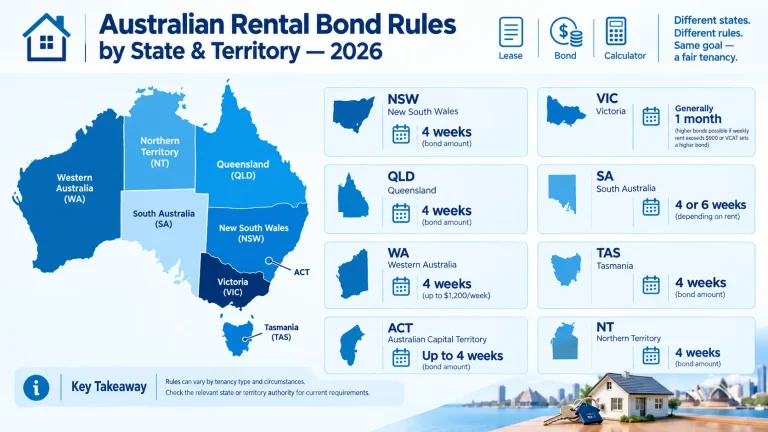
Australian Government Rent Assistance is a supplementary payment available to eligible people who pay rent in the private rental market or community housing and receive a qualifying payment. The amount depends on factors including the person’s circumstances and the amount of rent they pay.
Rent Assistance isn’t simply a fixed percentage of everyone’s rent. Services Australia explains that payment rates depend on circumstances such as relationship status, children and rent paid, with eligibility and payment amounts also affected by relevant income and assets rules.
Therefore, an online calculator can be useful for estimating rental costs, but users should check their actual eligibility and payment with Services Australia.
How Does Rent Assistance Work in Australia?
Rent Assistance Calculator Australia is generally paid as part of another eligible payment rather than as a completely separate standalone payment. You generally need to pay rent to a private landlord or community housing provider and receive a qualifying payment.
The amount of Rent Assistance can change depending on your circumstances and rent amount. Services Australia states that Rent Assistance is only payable once rent exceeds the relevant threshold, and the calculation uses a rate of 75 cents for each dollar above the threshold until the applicable maximum is reached.
This means that simply knowing your weekly rent isn’t always enough to determine your exact entitlement.
For example, two renters paying different amounts may receive different assistance, while two people paying the same rent may also have different circumstances affecting their payment.
Why Use a Rent Calculator?
A rent calculator can make everyday budgeting much easier.
Suppose your rent is:
- $450 per week
- $900 per fortnight
- $1,950 per month
You may want to know how these figures compare over a year.
For budgeting, weekly rent can be converted into an approximate annual amount by multiplying the weekly figure by 52.
For example:
$450 × 52 = $23,400 per year
This gives you a simple way to understand how much of your annual income goes toward housing.
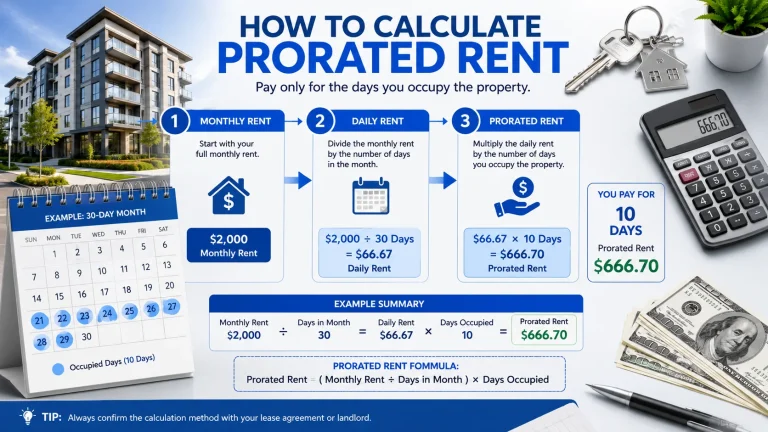
However, monthly rent calculations can require more care. For example, Consumer Affairs Victoria’s rent calculator converts rent between daily, weekly, fortnightly, monthly, six-monthly and yearly periods using a 365-day year.
Rent Calculator VIC Calculate Your Rental Payments
If you live in Victoria, a rent calculator VIC can help you convert rental payments between different periods.
This can be particularly useful when:
- Comparing weekly and monthly rent
- Working out rent for part of a rental period
- Planning a household budget
- Checking how much rent is payable when moving
- Comparing different rental properties
For example, if a property costs $600 per week:
Weekly rent: $600
Fortnightly rent: $1,200
Approximate annual rent: $31,200
The actual calendar-month equivalent isn’t simply the weekly amount multiplied by four. There are more than four weeks in an average month, which is why annual and daily calculations provide a more accurate basis for converting rental periods. Consumer Affairs Victoria specifically explains this distinction in its official rent calculator.
What Is Rental Yield?
While renters are primarily interested in rent affordability, property investors often focus on rental yield.
Rental yield measures rental income in relation to a property’s value or purchase price. It is commonly expressed as a percentage.
There are two important types:
- Gross rental yield
- Net rental yield
Gross yield is easier to calculate because it only considers rental income and property value. Net yield goes further by accounting for relevant property expenses.
This distinction is important because a property that appears attractive based on gross rent may produce a significantly lower return after expenses.

How Do I Calculate Rental Yield?
If you’re asking how do I calculate rental yield, the basic formula is straightforward.
Gross Rental Yield Formula
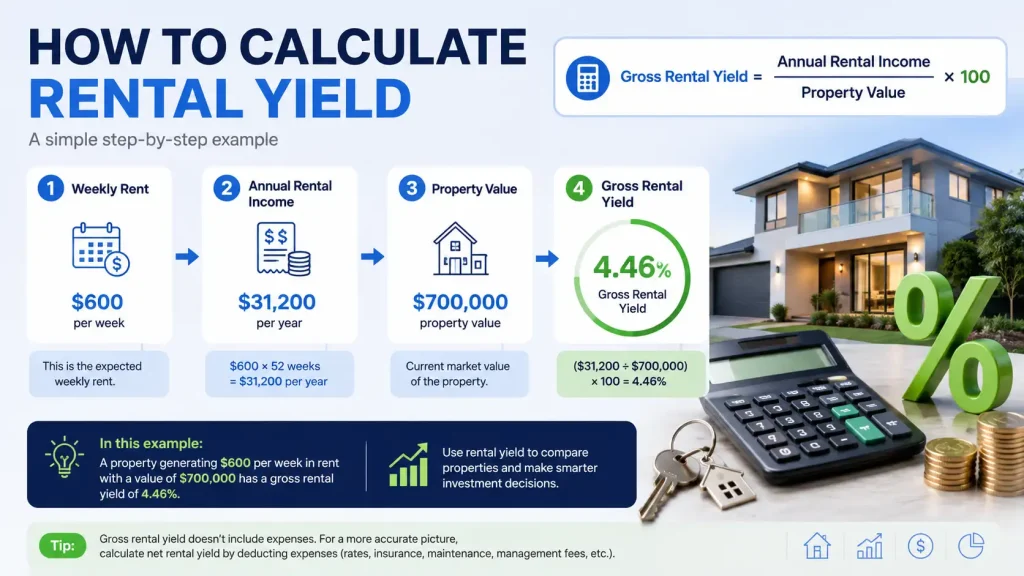
Gross Rental Yield = (Annual Rental Income ÷ Property Value) × 100
First, calculate the annual rental income.
If a property earns $600 per week:
$600 × 52 = $31,200
If the property is worth $700,000:
$31,200 ÷ $700,000 × 100 = 4.46%
The estimated gross rental yield is therefore approximately 4.46%.
This is the basic calculation used by many rental yield calculators.
How to Calculate Rental Yield A Simple Example
Let’s take another example.
Imagine an Australian investment property has:
- Purchase price: $800,000
- Weekly rent: $700
- Annual rent: $36,400
Using the formula:
($36,400 ÷ $800,000) × 100 = 4.55%
So the property’s gross rental yield is approximately 4.55%.
This figure provides a quick comparison between properties, but it doesn’t tell you exactly how much money you will keep after property expenses.
That’s why investors often calculate net rental yield as well.
What Is Net Rental Yield?
Net rental yield takes property expenses into consideration.
These expenses can include items such as:
- Property management fees
- Insurance
- Council rates
- Maintenance
- Repairs
- Strata or body corporate costs
- Vacancy periods
- Other ongoing property expenses
A simplified formula is:
Net Rental Yield = ((Annual Rental Income − Annual Expenses) ÷ Property Value) × 100
For example, suppose:
Annual rent = $36,400
Annual expenses = $8,000
Property value = $800,000
Net rental income becomes:
$36,400 − $8,000 = $28,400
Then:
$28,400 ÷ $800,000 × 100 = 3.55%
So the estimated net rental yield is 3.55%, compared with the gross yield of 4.55%.
This demonstrates why looking only at advertised rental yield can give an incomplete picture of an investment property’s performance.
Rental Yield Calculator Why Use One?
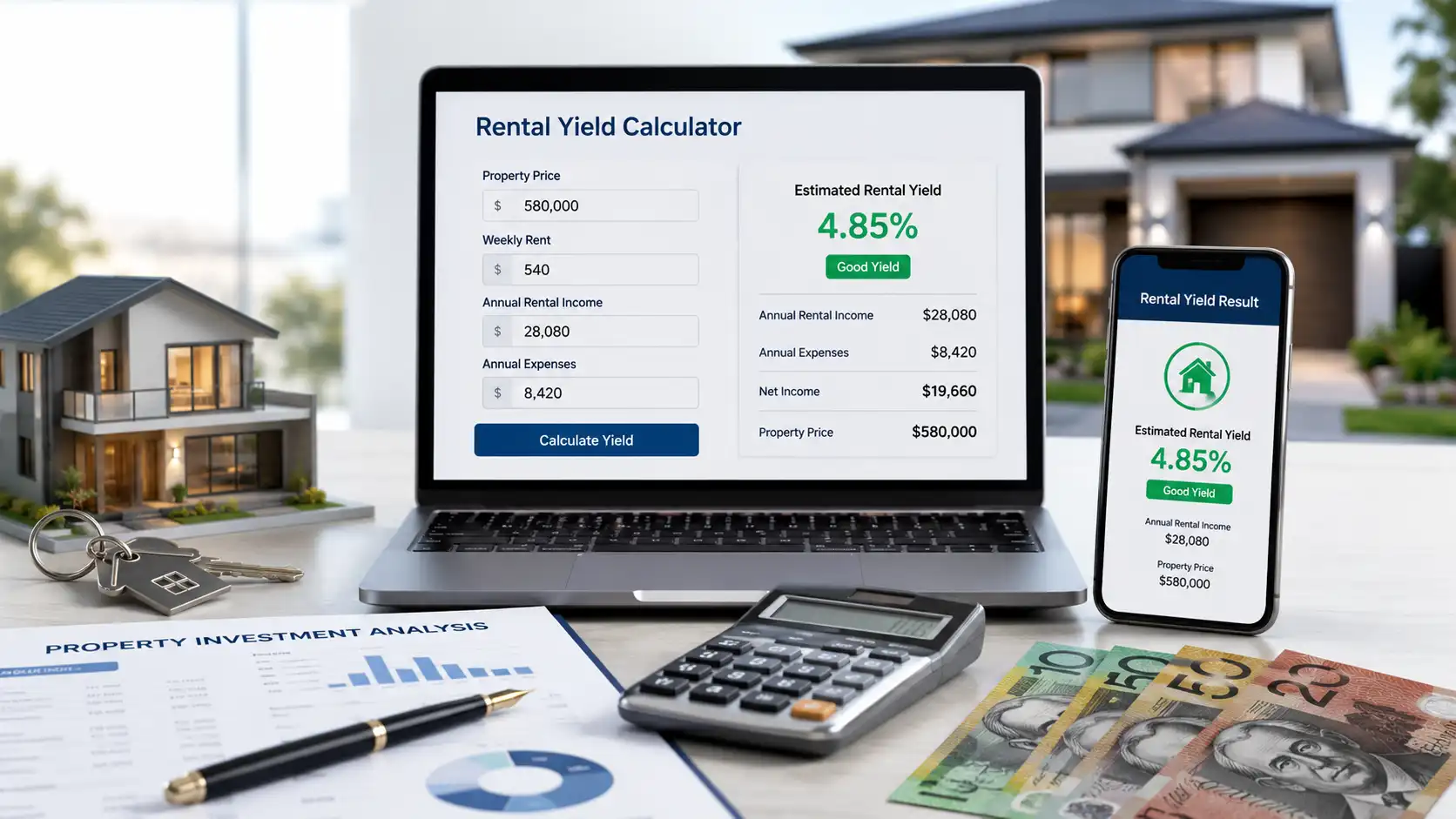
A rental yield calculator can save time by automatically performing the calculations.
Instead of manually calculating annual rent, subtracting expenses and converting the result into a percentage, you can enter your property information into a calculator.
Typical inputs include:
- Property purchase price
- Current property value
- Weekly rental income
- Annual property expenses
Some advanced calculators may also allow investors to consider vacancy, management fees and other costs.
The main advantage is that you can quickly compare multiple properties.
For example:
| Property | Price | Weekly Rent | Gross Yield |
|---|---|---|---|
| Property A | $600,000 | $500 | 4.33% |
| Property B | $700,000 | $600 | 4.46% |
| Property C | $800,000 | $700 | 4.55% |
This can help investors identify which property generates more rental income relative to its value.
Is a Higher Rental Yield Always Better?
Not necessarily.
A higher rental yield can mean stronger rental income relative to the property’s price, but property investment decisions involve more than yield.
Investors may also consider:
- Location
- Property condition
- Vacancy risk
- Capital growth potential
- Insurance
- Maintenance
- Financing costs
- Local rental demand
- Property taxes and other expenses
A property with a lower rental yield may still appeal to an investor who prioritises long-term capital growth.
Conversely, a property with a higher yield may have other risks that need to be investigated.
Therefore, rental yield should be treated as one financial measure rather than the only factor in an investment decision.
Rent Assistance Calculator Australia and Rental Yield Are Different
It’s important not to confuse Rent Assistance with rental yield.
Rent Assistance relates to eligible renters and government support for rental costs.
Rental yield relates primarily to property investment and measures rental income relative to property value or purchase price.
A renter might use a rent assistance calculator Australia to understand their rental budget, while a property investor might use a rental yield calculator to estimate investment returns.
These tools answer different questions, but both can make rental-related financial calculations easier.
Frequently Asked Questions
What is a rent assistance calculator Australia?
It is an online tool designed to help users estimate rental costs and, depending on the tool, potential Rent Assistance. Actual eligibility and payment amounts should be confirmed with Services Australia because individual circumstances matter.
Is there a rent calculator VIC?
Yes. Consumer Affairs Victoria provides a rent calculator that converts rent between daily, weekly, fortnightly, calendar-monthly, six-monthly and yearly periods.
How do I calculate rental yield?
Use:
Rental Yield = (Annual Rental Income ÷ Property Value) × 100
For weekly rent, multiply the weekly amount by 52 to estimate annual rental income.
How to calculate rental yield with expenses?
For a simplified net yield calculation:
Net Rental Yield = ((Annual Rent − Annual Expenses) ÷ Property Value) × 100
This gives a more complete picture than gross yield because it accounts for ongoing property costs.
What is the difference between gross and net rental yield?
Gross rental yield considers rental income compared with property value. Net rental yield deducts relevant annual expenses before calculating the percentage.
Final Thoughts
For tenants, it’s important to understand how much rent you can afford, and for property investors, it can help you calculate potential returns on your investment.Whether you are a tenant trying to understand your rent affordability, or a property investor comparing potential rental returns on your investment, accurate rental calculations can make financial planning easier.
A rent assistance calculator Australia can be useful to estimate rent related expenses and determine the potential support in your budget, while a rent calculator VIC aids in converting rent payments between rent time periods.
A rental yield calculator is useful for an investor looking for a property investment to give an instant approximation to gross and net rental yields. It’s also important to know how to do the calculation manually, since this will enable you to verify numbers and to compare the rental yield of different properties.
Use up-to-date official information and realistic expenses and current rental figures for the most accurate results. Consider eligibility for government assistance (check with Services Australia) and the overall financial equation, not just rental returns, when making any investment decisions in relation to a property.