Mortgage Overpayment Calculator UK
Introduction
A mortgage overpayment calculator UK helps you estimate how making extra payments could shorten your mortgage term and reduce the total interest you pay. Enter your mortgage balance in the Mortgage Overpayment Calculator UK.
A mortgage overpayment calculator UK helps you see what could happen if you pay more than your required monthly mortgage payment. By entering your current balance, interest rate, remaining term, and planned overpayment, you can estimate how much interest you could save and how much sooner you might repay your mortgage.
Even a relatively small extra payment can make a difference over many years. For example, adding £100 or £200 to your regular payment reduces your mortgage balance faster, which can reduce the interest charged on that balance over time.
But the result depends on your mortgage terms. Your lender may have an annual overpayment allowance, early repayment charges, or specific rules about how additional payments are applied.
Use the calculator to compare your normal mortgage payments with different overpayment strategies. You can test a regular monthly amount, a larger lump sum, or both to understand the potential impact before making a decision.
In this guide, you’ll learn how mortgage overpayments work in the UK, how savings are calculated, what fees and limits to check, and how to understand your calculator results. e, interest rate, remaining term, and planned overpayment to compare your original repayment schedule with the faster option.
Table of Contents
What Is a Mortgage Overpayment Calculator UK?
What Is a Mortgage Overpayment Calculator UK?
A mortgage overpayment calculator is a tool that estimates how additional mortgage payments could affect your loan. Instead of looking only at your required monthly payment, it compares your current repayment plan with a scenario where you pay extra.
You can usually enter details such as
- Your outstanding mortgage balance
- Current interest rate
- Remaining mortgage term
- Regular monthly payment
- Additional monthly overpayment
- Lump-sum overpayment
The calculator then estimates how these extra payments could change your mortgage.
Depending on your circumstances, overpaying may help you:
- Reduce the mortgage balance faster
- Pay less interest over the remaining term
- Shorten the mortgage repayment period
- Reach your mortgage-free date sooner
- Compare different overpayment strategies
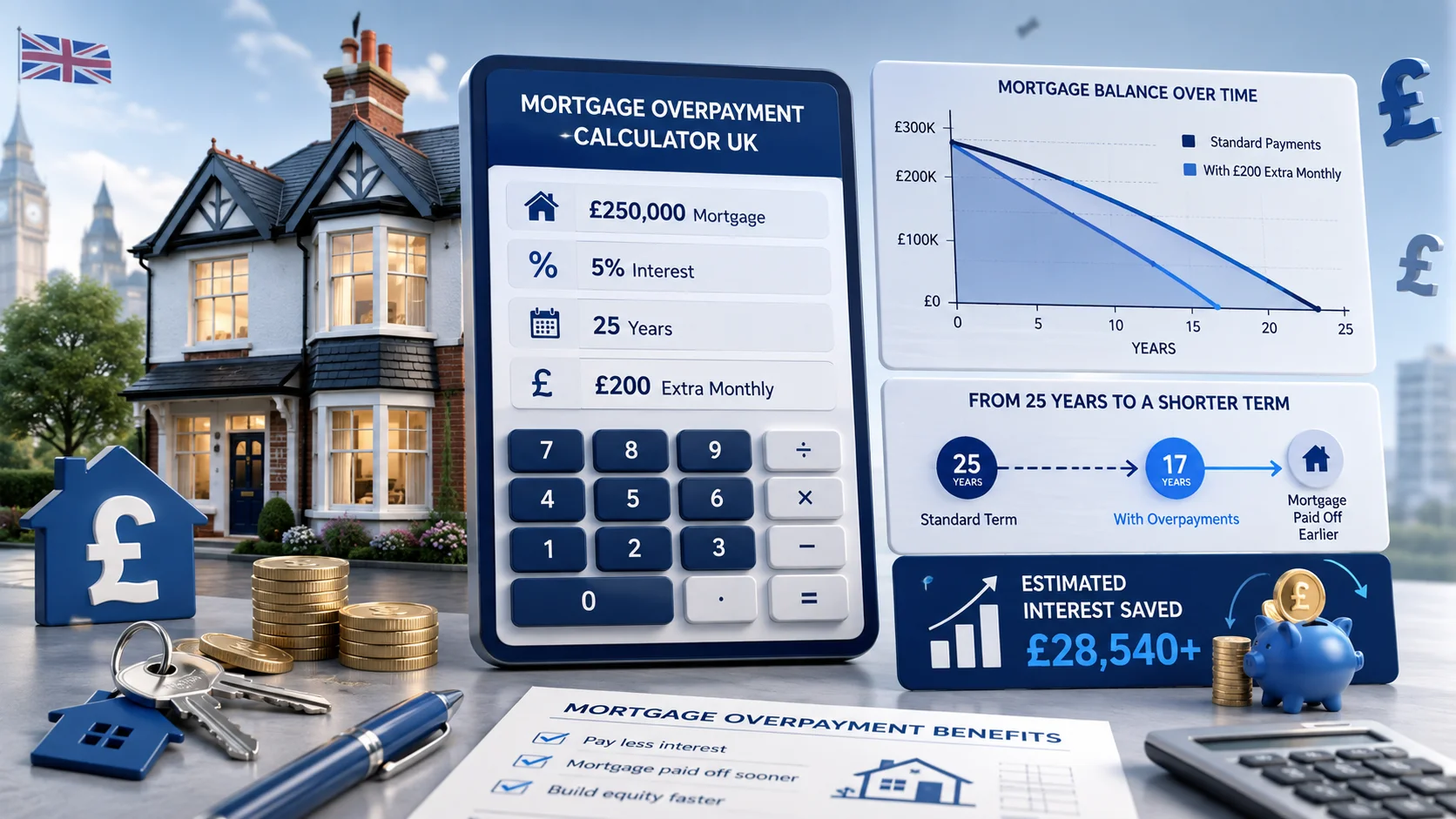
For example, suppose you have £250,000 remaining on your mortgage and decide to pay an extra £200 each month. That additional £200 goes toward reducing the balance, subject to how your lender applies overpayments.
Over time, a lower balance can mean less interest is charged. The earlier the additional payment reduces your principal, the longer it can potentially affect future interest costs.
How Mortgage Overpayments Work in the UK
A mortgage overpayment calculator in the UK With a standard repayment mortgage, each monthly payment generally covers both interest and part of the outstanding principal.
Interest is calculated based on the mortgage balance and applicable interest rate. As the balance falls, the amount of interest charged can also fall.
When you make an overpayment, more of your money goes toward reducing the outstanding balance sooner.
Simple example
Suppose you have:
- Mortgage balance: £250,000
- Interest rate: 5%
- Remaining term: 25 years
- Regular monthly payment: approximately £1,461
If you add £200 to that payment each month, you would pay approximately £1,661 per month.
The exact savings depend on how your lender calculates interest and applies overpayments, but the general principle is straightforward: the sooner you reduce the principal, the less interest can accumulate on that portion of the debt.
How to Calculate Mortgage Overpayment Savings
A useful calculator compares two scenarios:
Scenario A: Continue making your normal mortgage payments.
Scenario B: Make your normal payments plus an additional amount.
The difference between the two scenarios can show your potential:
- Interest saving
- Reduction in mortgage term
- Remaining balance over time
- Total amount paid
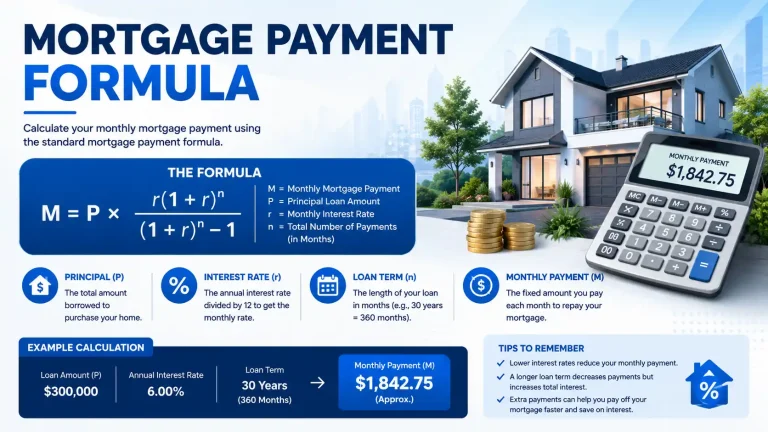
For a simplified monthly calculation, mortgage repayment can be estimated using the standard amortisation formula:
M = P × [r(1+r)ⁿ] / [(1+r)ⁿ − 1]
Where:
- M = monthly mortgage payment
- P = principal balance
- r = monthly interest rate
- n = total number of monthly payments
An overpayment calculator goes further by modelling what happens when additional money is regularly applied to the mortgage.
A Real-World Overpayment Example
Consider a homeowner with a £250,000 mortgage at 5% interest and 25 years remaining.
Their estimated standard repayment is around £1,461 per month.
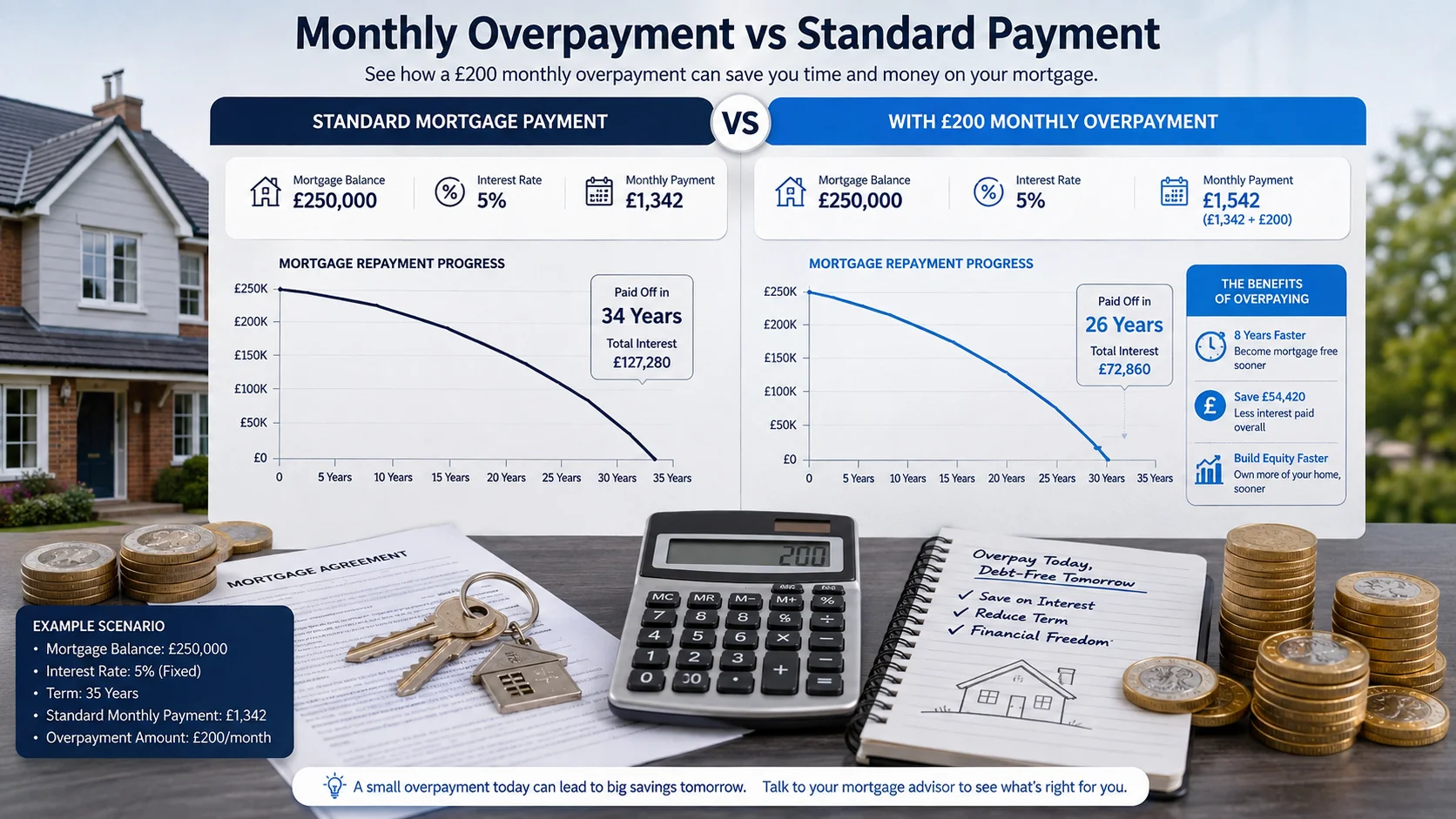
Now imagine they consistently pay an additional £200 per month.
| Mortgage scenario | Approx. monthly payment |
|---|---|
| Standard payment | £1,461 |
| With £200 overpayment | £1,661 |
| Additional monthly amount | £200 |
The important part isn’t simply the extra £200. Each overpayment reduces the balance earlier than it would have been reduced under the original schedule.
Over hundreds of payments, this can change the amount of interest charged and potentially bring the mortgage-free date forward significantly.
Unique insight: If your mortgage rate changes during the life of the loan, the value of an overpayment changes too. A £200 monthly overpayment made while your interest rate is relatively high can have a different long-term effect from the same £200 payment made when your rate is substantially lower. For this reason, recalculating after a rate change can give you a more accurate picture than relying on a single calculation for the entire mortgage.
Monthly vs. Annual Mortgage Overpayments
You don’t necessarily have to overpay every month.
Some borrowers prefer to make:
- Regular monthly overpayments
- One annual lump-sum payment
- Occasional larger payments
- A combination of monthly and lump-sum overpayments
Monthly overpayments
Monthly overpayments provide a consistent way to reduce your mortgage balance.
For example, an extra £150 per month means £1,800 of additional payments per year, assuming 12 payments.
Annual lump-sum payments
A yearly lump sum can work well for people who receive:
- Annual bonuses
- Commission
- Tax refunds
- Inheritance
- Other irregular income
However, the financial effect can differ depending on when the lender applies the payment. Earlier principal reduction generally means less interest can accrue afterward.
UK Mortgage Overpayment Rules and Limits
If you are planning to make a big overpayment, verify your mortgage agreement first.
Other mortgage products in the UK may give the borrower the option to pay more than the usual amount on their monthly repayments, up to a certain amount, and without incurring an early repayment fee (this can vary from lender to lender and mortgage to mortgage).
Certain mortgages might provide some kind of overpaying allowance annually, typically as a percentage of the outstanding loan. Other conditions or charges may apply to others.
Check:
- Your mortgage offer
- The existing rate of your lender
- The amount that you can overpay on your annual contract
- Any repayment charges imposed early on repayment.
- This is because it is not clear whether this allowance resets every year.
- How your lender uses the overpayment or mortgage product allows it.
Should You Overpay Your Mortgage?
Overpaying can be attractive, but it isn’t automatically the best financial decision for everyone.
Potential advantages
1. Pay less interest
Reducing your mortgage balance can reduce future interest charges.
2. Become mortgage-free sooner
Extra payments can shorten the time needed to repay the mortgage.
3. Reduce your debt
A lower outstanding balance can improve your overall financial position.
4. Gain certainty
For some homeowners, reducing mortgage debt provides a predictable financial benefit compared with leaving money in a low-interest account.
Potential disadvantages
Money paid into your mortgage may become less accessible than cash held in an easy-access savings account.
You should also consider whether you have:
- An emergency fund
- High-interest debts
- Upcoming major expenses
- Other investment opportunities
- An early repayment charge on your mortgage
For example, paying down a mortgage while carrying expensive unsecured debt may not always be the most efficient order of priorities.
How to Use a Mortgage Overpayment Calculator UK
You can get a useful estimate by entering the following information:
Step 1: Enter your current balance.
Use your current outstanding mortgage balance rather than the original amount you borrowed.
Step 2: Enter your interest rate.
Use your current mortgage interest rate.
Step 3: Enter your remaining term.
Enter the number of years or months remaining on your mortgage.
Step 4: Enter your overpayment.
Choose whether you want to model an additional monthly payment or a lump sum.
Step 5: Compare the results.
Look at the difference between your standard mortgage and overpayment scenarios.
Pay particular attention to:
- Estimated mortgage-free date
- Total interest paid
- Potential interest saved
- Total additional amount paid
- Remaining balance over time
A Better Way to Think About Overpayments
Instead of asking only, “How much interest will I save?” Consider asking:
“What is the best use of my next £100?”
That £100 could potentially be used for a mortgage overpayment, emergency savings, debt repayment, investing or another financial goal.
A calculator helps quantify the mortgage option, but your personal circumstances determine whether that option is actually preferable.
For example, if your mortgage rate is 5% and you have sufficient emergency savings, reducing a 5% debt may be attractive. But if you don’t have enough cash available for unexpected expenses, building an emergency fund could provide more practical financial security.
What Happens If Your Mortgage Rate Changes?
Mortgage rates can change depending on your mortgage type.
A fixed-rate mortgage generally keeps the agreed rate unchanged during the fixed period. A variable or tracker mortgage can change according to its terms.
If your interest rate changes, rerun your calculation.
This is especially useful when:
- Your fixed-rate period is ending
- You are considering remortgaging
- Your tracker rate changes
- You are deciding whether to increase overpayments
A new calculation can show whether your existing overpayment strategy still produces the result you want.
What Could Mortgage Overpayments Do for You?
A mortgage overpayment can affect two important parts of your mortgage: the outstanding balance and the interest charged over time.
When you pay more than your required amount, the additional money can reduce your mortgage balance sooner. A smaller balance may then result in less interest being charged over the remaining term, depending on your mortgage and how your lender calculates interest.
The potential benefits include:
Reduce Your Mortgage Balance Faster
Extra payments can reduce the amount you owe more quickly than your standard repayment schedule.
Potentially Save Interest
If your balance falls earlier, there may be less principal on which interest is calculated in future periods. The exact saving depends on your interest rate, payment schedule, and mortgage terms.
Potentially Shorten Your Mortgage Term
If your regular payment continues while you make additional payments, you may reach your mortgage-free date sooner.
Compare Different Strategies
A calculator lets you test different amounts before making an overpayment. You might compare £100, £200, or £500 per month, or test a one-off lump sum.
The important point is that an overpayment calculator provides an estimate, not a guarantee. Your lender’s rules and the way payments are applied can change the actual outcome.
Frequently Asked Questions
Is a Mortgage Overpayment Calculator UK accurate?
It can provide a useful estimate, but the actual result may differ because lenders use different interest calculations, payment dates and overpayment rules. Always compare the calculator result with your lender’s terms.
How much can I overpay on my UK mortgage?
The amount you can overpay without an early repayment charge depends on your mortgage agreement and lender. Check your specific product before making a significant additional payment.
Does overpaying a mortgage reduce interest?
Generally, reducing your mortgage principal earlier can reduce the amount of interest charged over the remaining term. The exact saving depends on your balance, rate, payment schedule and mortgage conditions.
Is it better to overpay monthly or make a lump sum?
Both approaches can reduce the mortgage balance. Monthly overpayments provide consistency, while lump sums can be useful when you receive irregular income. The timing and amount of the payment can affect the result.
Can I use an overpayment calculator after remortgaging?
Yes. Enter your new mortgage balance, interest rate, remaining term and planned overpayment to estimate the effect under the new mortgage.
Should I overpay my mortgage or save the money?
There is no universal answer. Compare the effective benefit of reducing your mortgage with savings rates, other debts, emergency-fund needs and your personal financial goals.
How do mortgage overpayments work?
A mortgage overpayment means paying more than your required payment, reducing your balance faster. This may help you pay less interest and repay your mortgage sooner.
Is it worth overpaying your mortgage?
It can be worthwhile if the potential interest savings outweigh other uses for your money. Check your savings, other debts, and any early repayment charges first.
What is a remortgage?
A remortgage means replacing your existing mortgage with a new mortgage deal. After remortgaging, you can recalculate your potential overpayment savings using your new mortgage details.
Final Thoughts
A mortgage overpayment calculator UK gives you a practical way to see how additional payments could change your mortgage. Rather than guessing, you can compare different overpayment amounts and see how they may affect your interest costs and mortgage-free date.
Before making substantial overpayments, check your lender’s rules and any applicable early repayment charges. Then use the numbers to decide whether paying down your mortgage fits your wider financial plan.